
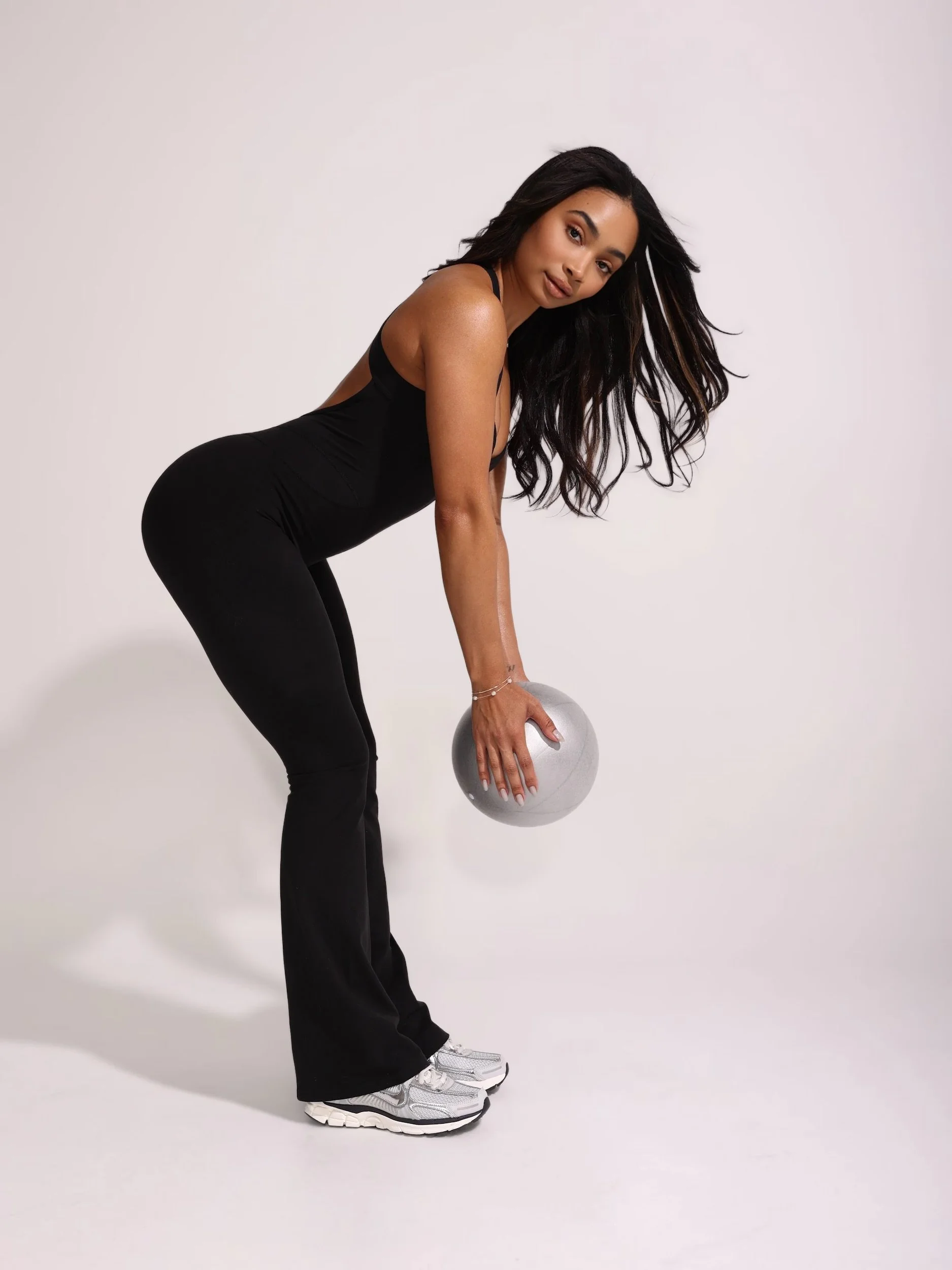
Hey, I’m Chanel.
Sculpted by Movement was born out of a need I saw over and over again. Not just in myself, but in nearly everyone I worked with: poor movement patterns, posture imbalances, and a lack of understanding about how our bodies are meant to move.
Clients who’d done years of heavy lifting or back-to-back classes all showed the same issue: injuries, pain, or stalled progress despite their effort. They didn’t lack motivation — they needed better guidance, correction, and help with proper form.
At SBM, we combine corrective movement with sculpting and strength, helping you move well and train hard, without sacrificing your body in the process.
From 1:1 sessions to group classes, we prioritize form over ego, and teach you how to move with intention. Something as simple as correcting your hip hinge or improving ankle mobility can transform your workouts, relieve chronic tension, and unlock visible results faster.
This isn’t just about working out. It’s about rebuilding the foundation of how you move, so your training works with your body, not against it.
Built on lived experience.
Built on lived experience.
Living with PCOS
and chronic pain
changed how I see the body.
“I’ve had to learn my body — not by choice at first, but out of necessity. Between PCOS, chronic pain, scoliosis, and training injuries, understanding my body came before understanding anything else.”
I have PCOS. I live with chronic pain. I have scoliosis. These are not credentials I mention to impress — they are the reasons I became the trainer I am.
When your body refuses to follow the textbook, you stop looking for one-size-fits-all answers. You begin to ask better questions. You adopt a holistic lens. You experiment carefully. You listen closely. Over time, the pattern emerges: what aggravates your pain, what supports recovery, what shifts with your hormones.
That lived knowledge is why I weave cycle syncing into my programming. Aligning training with hormonal and pain fluctuations doesn’t add fad-level complexity — it adds predictability. It helps clients move with greater consistency, recover with less uncertainty, and reduce flare-ups that derail progress. The result is not faster fixes but smarter, individualized plans that prioritize long-term progress and resilience.
This approach is practical, evidence-aware, and rooted in experience. It meets each body where it is and builds forward from there.
Here’s what I’ve learned as a personal trainer and group fitness instructor:
Changed the way I see the body.
After enough clients, I stopped following programs and started reading people: the brace before a squat, a hip shifting under load, a shoulder compensating early.
Most trainers skip the real answer: assessment. Not checkboxes, but true observation. A program built on uncorrected patterns isn’t progress; it reinforces the problem.
Injuries taught me as much as sessions did.
Every injury I've sustained through training (and there have been a few). I used as a reason to stop and actually understand what happened. Why that muscle. Why that pattern. What was compensating for what. Those moments of forced stillness built the diagnostic instinct I bring to every assessment.
Strength is the missing piece.
Group classes are popular for a reason — they work and they are fun. But there's a void in what they can offer: progressive, individualized strength training that builds on what those classes develop. That's not a criticism of the industry. It's a gap I intend to fill.
The best way to understand the method is to experience it.
The Movement Assessment is 60 minutes. You'll leave understanding your body in a way you likely don't right now. That's the promise — regardless of what comes after.